Onpack generates the QR code, hosts the product page behind it, and shows every scan live, phones and POS systems alike. Zero code, zero infrastructure, zero reprints.
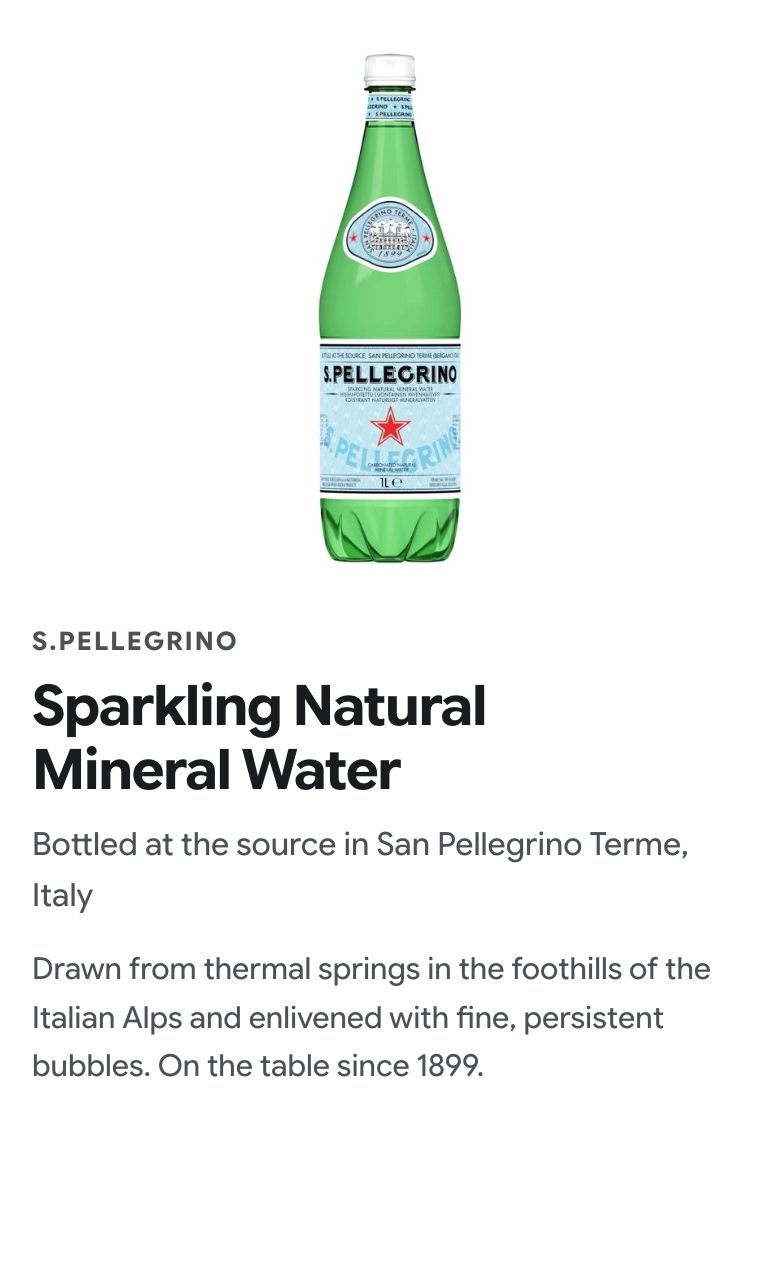
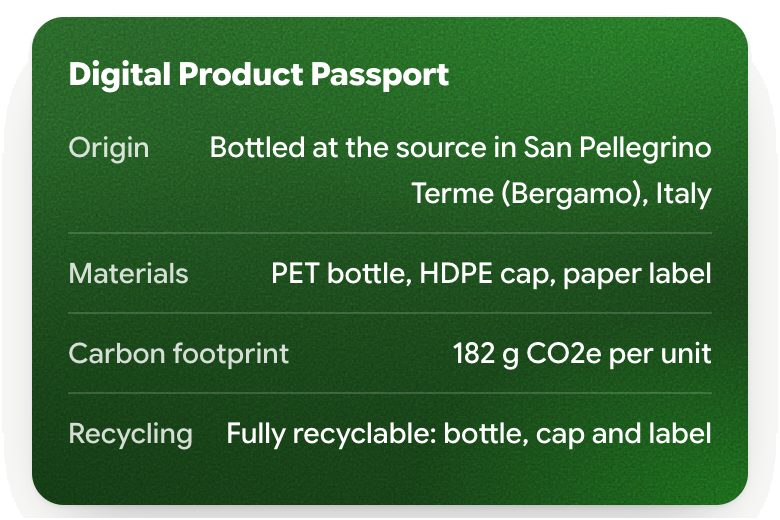
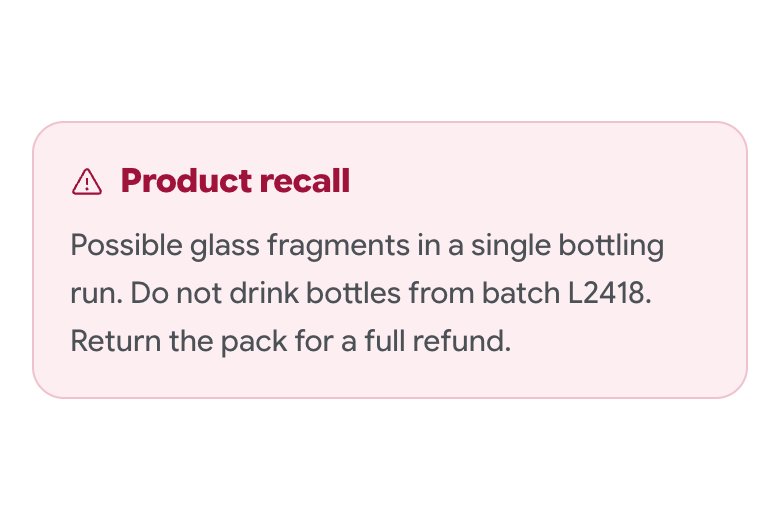
A page like this: your photo, your specs, recall notices when they matter, in the shopper's language. No website needed. Already have one? Point the code there instead.
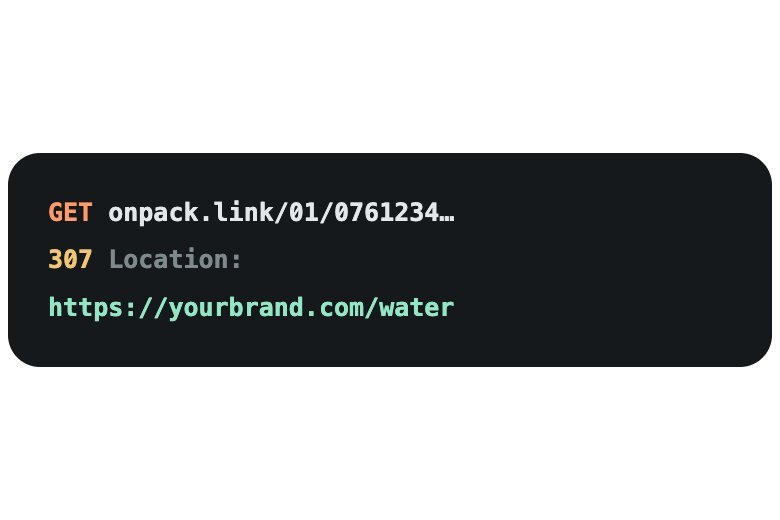
Codes redirect straight to your pages. Nothing to migrate.
What you can do with one GS1 Digital Link code
A GS1 Digital Link is a barcode that holds a web address instead of only a number. Onpack runs that web address, so a single printed code can do all of the following at once.
Answer POS systems, ERPs and AI agents
The code that opens a page for a shopper returns structured product data to checkout systems, inventory software and AI agents: JSON-LD and a full GS1 linkset from the same URL.
Give the product a page without building a site
Write a headline, a description, a photo, a button and as many links as you want. Onpack hosts it and the barcode opens it. Already have a product page? Point the code there instead.
Check the code fits your label before you print
Most packs need the old linear barcode and the new 2D code together, within 50 mm of each other. The generator below tells you whether both fit. On a 45 mm lip balm label, they do not.
Recall a single batch instead of the whole product
Store the origin, production date and expiry for every batch. If one batch is recalled, scanning a pack from it shows the recall notice in the shopper's language. Every other batch keeps working.
Send each country to a different page
The same pack can open your Mexican site in Mexico and your US site in the United States. Destination, legal text and language all follow where the scan happened.
Catch counterfeits with signed serial numbers
Each serial number is cryptographically signed and checked at scan time. The same serial appearing in two countries at once is flagged, and you can revoke one serial without touching the rest.
Show EU passport and Prop 65 data automatically
Scans in the EU can show Digital Product Passport information in the local language. Scans in California can show Proposition 65 warnings. Onpack picks the right one for where the phone is.
Put your own domain on every code
Serve codes from your name at ours, or bring your own hostname: we hand you the DNS records and manage the certificate. The printed URL carries your brand.
Automate all of it over one API
Every screen in the console is a documented endpoint underneath. Register products, pull print artwork and read scan stats from your own systems.
An analytics layer for the physical product
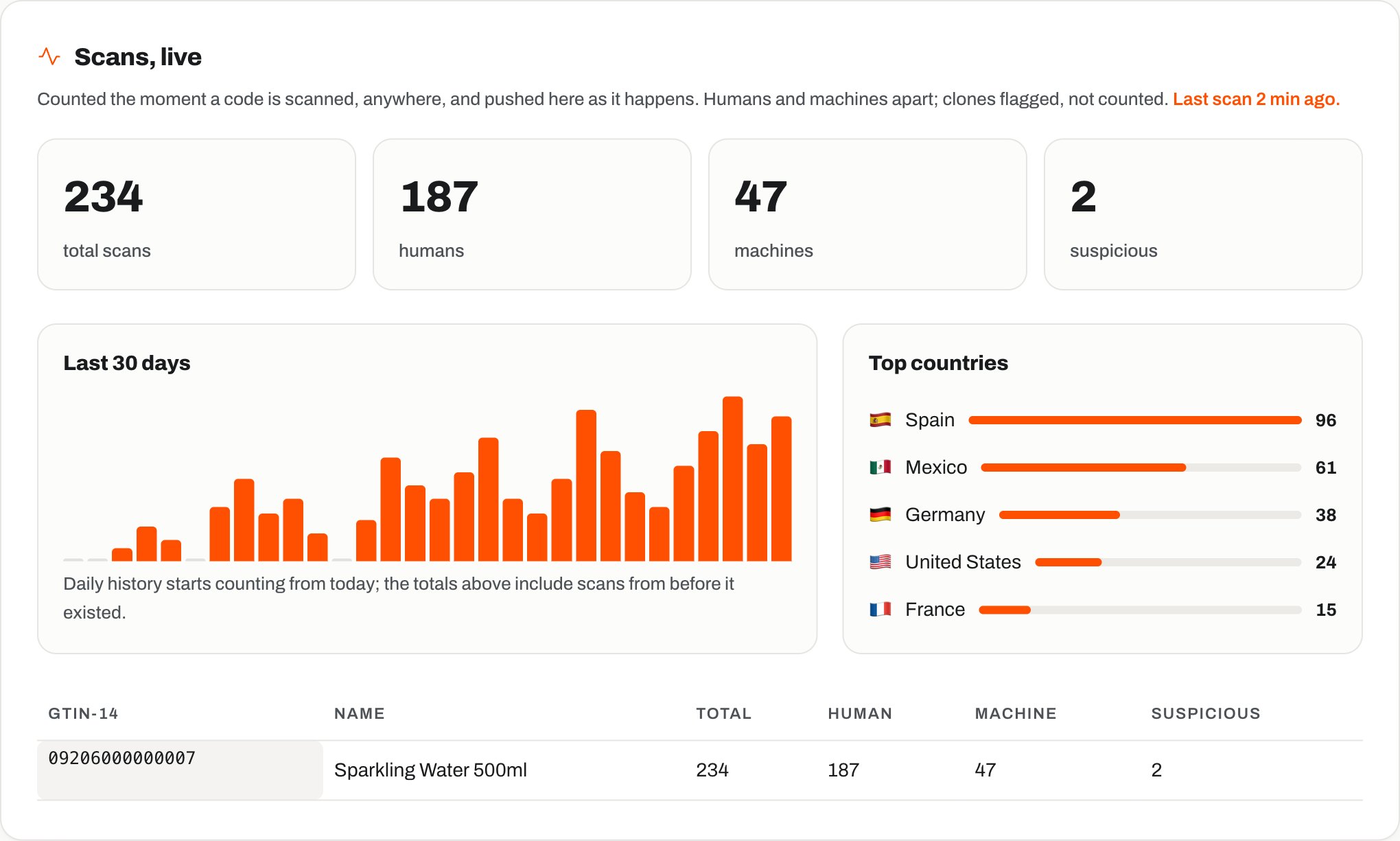
Your website tells you everything; your packaging has told you nothing. Point the barcode at Onpack and every scan reports in, with nothing to install and no tracking scripts on anyone's phone. Even when codes redirect to your own site, every scan is counted before the shopper lands. Webhooks push each one into your systems as it happens.
See every scan as it happens
Each product keeps a live tally, pushed to your console the moment a code is scanned anywhere in the world.
Phones and point-of-sale told apart
A shopper's phone and a checkout or warehouse scanner are counted separately, so marketing and operations each read their own numbers.
Counterfeit detection built in
A serial scanned in two countries at once is flagged as a likely fake instead of inflating your reach.
Generate a print-ready code
Enter a GTIN and get the QR code, its element string, and a check that it fits your label next to the linear barcode. No account, no watermark.
Your product
The number under your existing barcode. 8, 12, 13 or 14 digits.
Used to check both codes fit within the 50 mm dual marking distance.